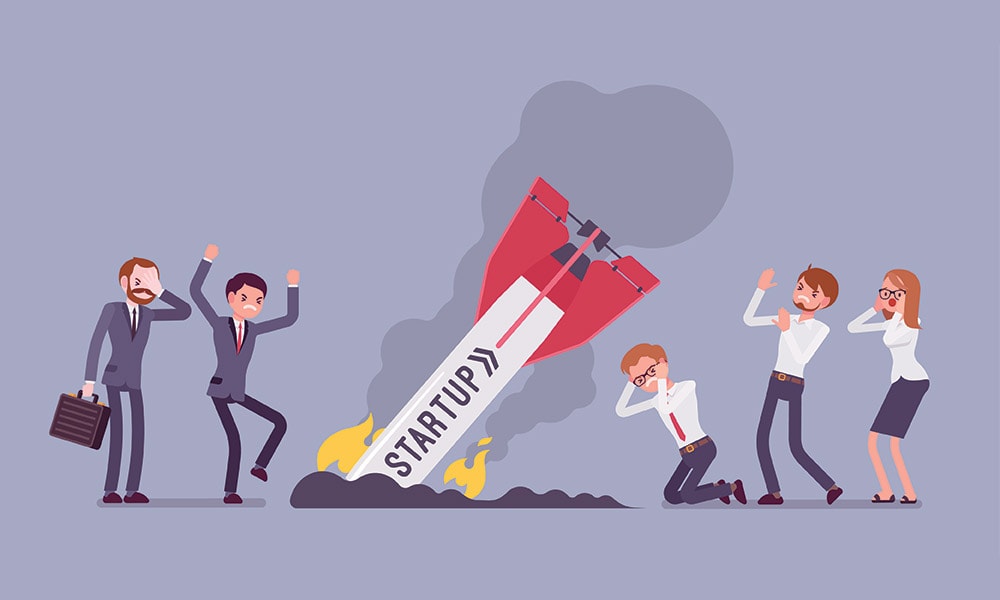
Artificial intelligence has become one of the most attractive startup categories in the world. New founders are launching AI companies at record speed, investors continue to pour money into the space, and modern tools make it easier than ever to build impressive products quickly. On the surface, this should be a golden era for AI entrepreneurship. In reality, it is also becoming a brutal filter.
A growing number of founders are discovering that building an AI startup is not the same as building a sustainable business. It is now possible to create a polished demo in days, connect to a powerful model through an API, and generate excitement online almost instantly. But shipping something that looks smart is not the same as creating something customers truly need, trust, and are willing to pay for over time.
That is the core reason so many AI startups fail. They mistake technical possibility for market inevitability. They assume that because AI can do something, someone will pay enough for it to support a healthy business. In many cases, that assumption collapses under the weight of competition, implementation friction, infrastructure costs, and weak product-market fit.
The “90% fail” problem
The phrase “90% of AI startups fail” is partly a shorthand, but the underlying warning is real. AI4SP said in 2024 that the overall failure rate for AI and tech startups had reached 92% in its survey, while recent AI-focused startup commentary and vendor analyses continue to describe extremely high failure and abandonment rates tied to weak demand, poor scaling, and low return on investment.
CB Insights’ latest failure analysis of VC-backed startups shows that the most common reasons startups shut down still revolve around familiar issues such as lack of market need, flawed business models, pricing pressure, and go-to-market problems rather than purely technical shortcomings. AI startups face those same classic startup risks, but with additional pressure from compute costs, data dependence, regulatory exposure, and rapid commoditization.
In other words, AI does not eliminate startup risk. In many cases, it magnifies it. It helps founders build faster, but it can also help them build the wrong thing faster. That speed creates a dangerous illusion of momentum, especially when demos, investor interest, and early social media attention are mistaken for validation.
The biggest reasons AI startups fail
The most common cause is still the oldest one in startups: no meaningful market need. AI founders often fall in love with the technology first and only later try to find a problem worth solving. That leads to elegant tools with weak urgency, vague buyers, and no clear path to retention.
A second major problem is wrapper syndrome. Many startups are essentially lightweight interfaces built on top of foundation models they do not own or control. If the product can be easily copied, if the underlying model provider can replicate the feature, or if pricing changes destroy margins, the startup has little defensibility.
Third, unit economics can quietly kill the company. AI businesses often face significant inference costs, cloud expenses, GPU constraints, and support overhead. If customer willingness to pay does not exceed the total cost to serve, growth makes the company weaker rather than stronger.
Fourth, founders underestimate the implementation gap. A demo may work beautifully in a controlled environment, but production is messy. Real customer data is incomplete, workflows are inconsistent, legal teams get involved, integrations take months, and users resist change. Many AI startups die in the space between “this looks amazing” and “this works reliably inside a real business”.
Fifth, data quality and readiness are often worse than expected. AI systems depend heavily on training data, feedback loops, governance, and context. Clarifai notes that poor data quality and lack of AI-ready data contribute to a significant share of generative AI project abandonment, which means the model is often not the real bottleneck.
Sixth, leadership and strategy failures are common. Startups may chase too many use cases, expand prematurely, promise outcomes they cannot control, or ignore the organizational realities of adoption. The result is confusion inside the team and skepticism outside it.
Seventh, regulation and trust are becoming more important. If a startup cannot explain how its system works, where the data comes from, or how risk is managed, customers may hesitate to deploy it in sensitive industries. Governance, auditability, and human oversight are becoming product requirements rather than optional extras.
Why AI startups fail faster now
One reason AI startup failure feels so intense in 2026 is that barriers to entry have fallen dramatically. A small team can launch a polished AI product quickly, which increases the number of competitors and shortens the time before a market gets crowded.
That speed creates two side effects. First, founders may skip customer discovery because building has become so easy. Second, buyers are overwhelmed by near-identical products. When multiple startups offer similar copilots, agents, or automation layers, the conversation quickly shifts to price, integrations, and trust. That is a difficult position for an early-stage company without strong differentiation.
At the same time, AI raises customer expectations. Buyers no longer want novelty alone. They expect consistent performance, clear ROI, fast onboarding, security, and responsible behavior. So while startups can build more quickly than before, they are also judged more harshly than before.
How to avoid becoming part of the 90%
The first rule is simple: start with a painful problem, not an impressive model. The strongest AI startups are not built around “what can this model do?” but around “what expensive, frequent, frustrating problem can we solve better than existing alternatives?”.
A useful test is whether you can explain the value proposition in one clear sentence without mentioning AI first. If the product only sounds compelling when described through the underlying technology, the market case may still be weak.
The second rule is to validate willingness to pay early. Founders often collect enthusiasm, pilot interest, or positive feedback and mistake it for demand. Real validation usually means someone commits time, budget, workflow change, or signature authority. If no one is willing to pay or switch behavior, the product is not ready.
The third rule is to protect margins from the beginning. This means understanding compute costs, API exposure, infrastructure usage, support load, and expected customer lifetime value. An AI product with weak unit economics is dangerous because every new user may increase the loss instead of improving the business.
The fourth rule is to build defensibility beyond the interface. That could come from proprietary workflows, specialized data, deep vertical expertise, trust, integrations, distribution, or unique operational execution. If your only advantage is using the same model everyone else can access, your position is fragile.
The fifth rule is to focus narrowly. AI startups often expand too early because adjacent use cases look tempting. But broad ambition can dilute product quality, create messaging confusion, and overwhelm the team. AI4SP and other startup analyses highlight lack of focus as a recurring failure pattern, especially when startups chase too many features and markets at once.
The sixth rule is to design for real-world deployment. That means planning for messy data, user training, compliance review, fallback workflows, monitoring, and human oversight. Startups that think beyond the demo are much more likely to survive customer reality.
The seventh rule is to earn trust deliberately. In sectors like healthcare, finance, legal, HR, and education, trust can be a bigger moat than raw model performance. Products need explainability, responsible defaults, audit trails, and a clear way for humans to stay in control when it matters.
What successful AI startups do differently
The AI startups that endure are usually more disciplined than flashy. They solve narrow but painful problems. They speak in customer outcomes instead of technical jargon. They control costs early. They integrate deeply into real workflows. And they understand that shipping a feature is not the same as changing customer behavior.
They also treat AI as one part of the business, not the entire business. Great founders know that success still depends on distribution, customer trust, pricing, retention, onboarding, and execution. AI may improve the product, but it does not replace the fundamentals of company-building.
In many cases, the winners are the teams that show restraint. They resist the temptation to promise artificial general intelligence when what the customer really needs is a reliable workflow improvement with measurable value. They avoid hype where precision matters. And they know when not to use AI at all.
The real lesson
The high failure rate among AI startups should not discourage founders, but it should make them more rigorous. AI is a powerful lever, not a shortcut to product-market fit. It accelerates execution, but it also accelerates bad assumptions when teams are not grounded in customer reality.
That is why the “90% fail” warning matters. It is less about a precise percentage and more about a pattern: most AI startups do not die because artificial intelligence stops working. They die because the business around the AI never becomes strong enough. The problem is not usually the model. The problem is everything required to turn that model into a durable company.
Founders who understand this have a better chance of surviving the next wave. They will build with focus, validate demand earlier, watch costs more carefully, and create trust before scale. In a market full of fast demos and louder hype, that discipline may be the real competitive advantage.